

As global construction sectors push forward higher requirements for building energy conservation and carbon reduction, exterior wall thermal insulation materials have become a core link in green building upgrading. Among numerous options, Inorganic Wall Insulation Mortar stands out steadily, drawing wide attention from engineering contractors, property developers and bulk purchasers. Industry analysts point out that the market gap for reliable Quality Mortar products is expanding, while end‑users are paying closer attention to real‑world Thermal Performance rather than merely nominal product parameters. Combined with the concept of Active Insulation, this inorganic mortar creates a stable and durable thermal barrier for building envelopes.
Different from traditional organic insulation materials that rely only on static heat blocking, the core advantage of Active Insulation reflected in inorganic wall insulation mortar lies in its adaptive temperature‑adjusting feature. This Inorganic Mortar adopts mineral‑based raw materials, avoiding hidden risks such as aging, melting and combustion hazards common in foam‑based insulation boards. After proper on‑site mixing and plastering construction, it forms an integrated seamless wall covering layer. This structure greatly reduces cold bridge gaps that easily appear between spliced insulation panels, delivering more stable long‑term Thermal Performance. Even under long‑term alternation of high‑temperature summer sunshine and cold winter frost, the mortar layer maintains structural integrity without obvious shrinkage cracking or hollowing‑out issues.
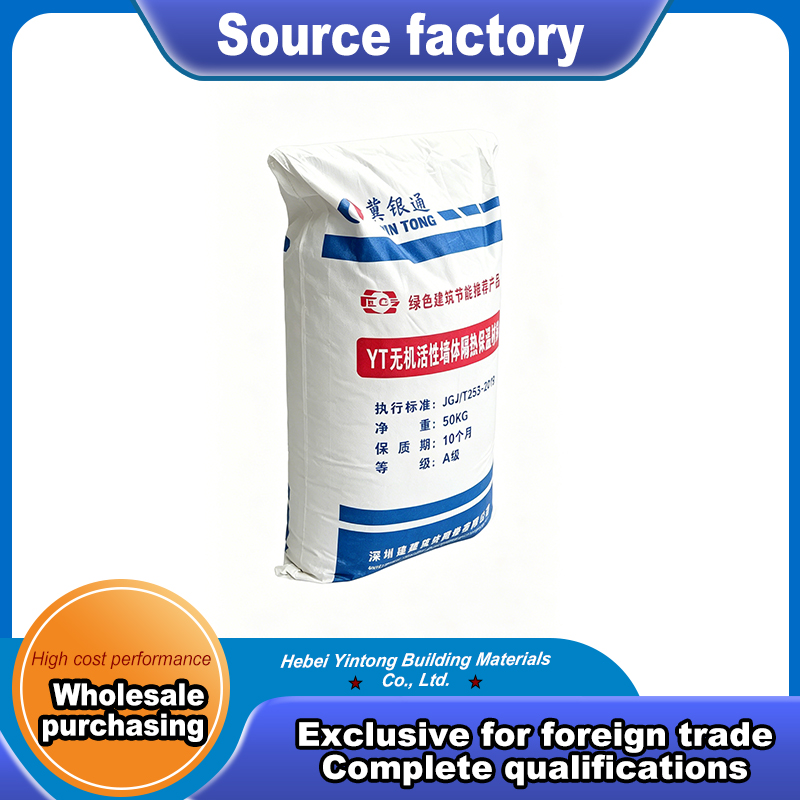
When comparing with mainstream competing products on the market, obvious differentiation can be observed. Organic foam insulation boards feature lightweight texture and initial low‑cost advantage, yet they suffer from poor fire resistance, easy ageing and short service life; ordinary ordinary cement‑based mortar owns low material cost, but lacks optimized thermal‑conductivity formulas, resulting in unsatisfactory insulation effects. By contrast, qualified Quality Mortar represented by inorganic wall insulation mortar balances fire safety, thermal insulation performance and service lifespan. Its fire‑proof rating reaches high‑grade non‑combustible standard, matching the fire protection requirements of high‑rise residential buildings, commercial complexes and public infrastructure projects. For project owners, long‑term maintenance costs can be effectively cut down, because frequent replacement of ageing insulation layers is no longer required.
For bulk purchasers and project procurement teams, targeted procurement suggestions are essential to avoid losses caused by inferior materials. First of all, do not simply judge products by unit price. Many low‑priced imitation Inorganic Mortar cut costs by reducing functional mineral fillers, which directly leads to deteriorated Thermal Performance and poor anti‑cracking capacity. Buyers should ask suppliers to provide complete third‑party test reports covering thermal conductivity, compressive strength and fire‑resistance indicators. Secondly, confirm matching construction guidance. Even high‑quality Quality Mortar will fail to reach design indexes under improper mixing ratio, plastering thickness and base‑wall treatment. Thirdly, focus on batch stability. Large‑scale engineering projects need continuous stable supply; purchasers are advised to conduct small‑sample pre‑testing before large‑volume orders, verifying whether the actual Active Insulation effect meets local climate characteristics.
Market feedback shows that more green‑oriented construction projects are shifting toward inorganic insulation mortar. With the tightening of building energy‑saving codes across regions, the demand for safe, long‑life thermal insulation building materials will keep growing. Purchasers shall combine local climatic conditions, project fire‑protection standards and budget arrangement, take comprehensive evaluation of product test data rather than only chasing low price, to select suitable inorganic wall insulation mortar solutions for construction projects.