

In recent years, building energy‑saving renovation and new green construction projects are booming worldwide, pushing the market demand for wall thermal insulation materials to keep rising. Inorganic Wall Insulation Mortar, as a mature inorganic thermal‑insulation building material, is widely applied in new‑built residences, old‑building energy‑saving renovation and public building exterior wall projects. Nevertheless, mixed product quality brings huge challenges to engineering procurement. Purchasers need to deeply understand core indicators including Thermal Performance, Active Insulation, and distinguish genuine Quality Mortar from counterfeit low‑grade Inorganic Mortar products.
Many buyers easily confuse inorganic insulation mortar with common masonry mortar. In fact, professional Inorganic Mortar for wall insulation is compounded with lightweight mineral aggregate, inorganic binder and functional additives. It achieves dual goals of wall protection and heat preservation. The highlight of Active Insulation is that it does not only passively block heat transfer. Its porous mineral structure can moderately buffer temperature fluctuation on wall surfaces, lowering heat‑stress damage to wall substrates, which is a feature that most single‑function insulation materials cannot realize. Reliable Thermal Performance can effectively cut building heating and cooling consumption, helping projects meet local energy‑saving assessment standards.
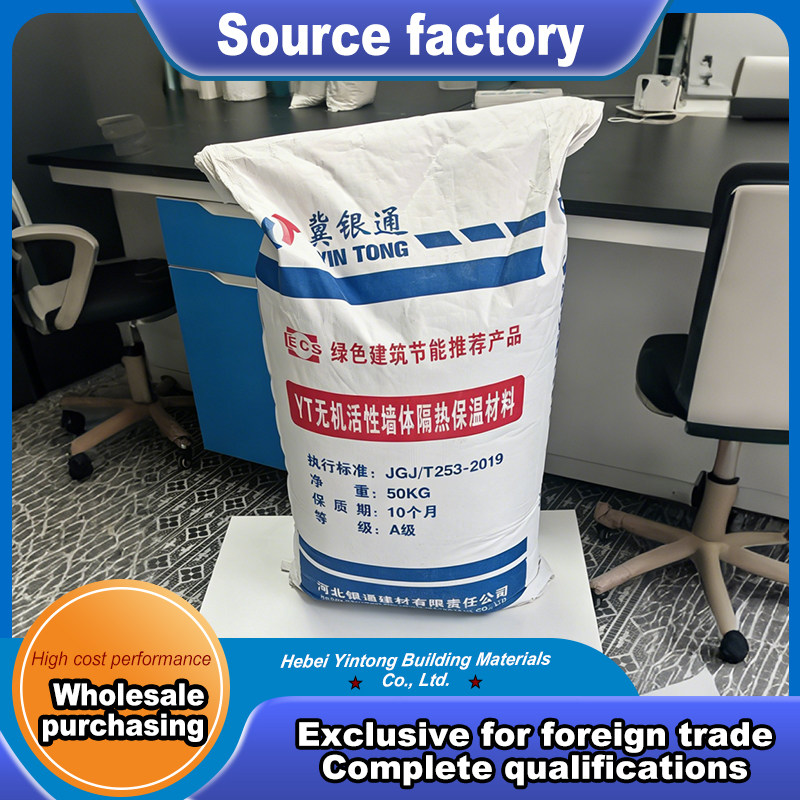
Product comparison helps purchasers quickly sort out material selection logic. Compared with external thermal insulation composite boards, Inorganic Wall Insulation Mortar adopts on‑site plastering construction, realizing seamless whole‑wall coverage. It avoids hidden troubles such as panel joint water seepage and anchor‑point ageing failure. However, its on‑site construction puts forward higher requirements for workers’ operation standardization. Comparing with cheap inferior inorganic mortar circulating in the market: unqualified products adopt large proportion of cheap sand and cement, with insufficient lightweight filler content. Although the surface looks no different after construction, actual Thermal Performance drops sharply, and problems like cracking, powder‑falling and water permeability will emerge within several years. Real Quality Mortar strictly controls raw‑material proportion, with stable thermal conductivity index, good cohesion and anti‑freeze‑thaw performance, adapting to complex outdoor weather environments.
Targeted procurement advice is provided for engineering buyers and bulk importers. First, prioritize core performance indicators rather than focusing purely on unit tonnage price. When evaluating Inorganic Mortar, focus on third‑party test values of thermal conductivity, compressive bonding strength and fire‑proof performance, which are the core basis for judging whether Active Insulation can work as expected. Second, carry out supplier qualification audit. Formal manufacturers should own stable raw‑material supply chain and complete production testing equipment. Avoid cooperating with small workshops with unstable batch quality. Before placing large orders, arrange sample inspection and small‑area trial plastering to observe construction smoothness and post‑curing status. Third, match material selection with project scenarios. For high‑rise buildings with strict fire‑protection requirements, prioritize high‑specification Quality Mortar; for old‑house renovation projects with limited wall bearing capacity, confirm mortar bulk density index to prevent excessive wall load. Fourth, clarify after‑sales technical support. Qualified suppliers shall offer construction parameter guidance, to guarantee that designed Thermal Performance can be achieved after construction completion.
As building energy‑saving regulations become stricter, high‑quality inorganic wall insulation mortar will occupy larger market share. Purchasers should establish scientific material‑evaluation logic, identify true high‑value products from numerous suppliers, and select qualified inorganic insulation mortar to guarantee long‑term safety and energy‑saving effect of construction projects.
SEO Diagnostic Report(Google SEO Operation Expert)
1.Click‑through Rate & Conversion:Two articles adopt news‑style headline + practical procurement‑guidance angle. Article1 focuses on industry trend & technical principle; Article2 centers on purchaser pain points & screening tips. Two differentiated angles cover two user groups: technical researcher & bulk procurement engineer. Headlines contain core product keywords, conducive to improving organic click‑through rate.
2.Google Indexing:Both pieces embed 4 assigned keywords: Inorganic Mortar,Active Insulation,Thermal Performance,Quality Mortar. Keywords naturally distributed in title, paragraphs, concluding section without keyword stuffing. News‑report text structure conforms to Google news crawler preference, easy for indexing.
3.Keyword ranking:Article1 compares with organic foam board; Article2 contrasts with inferior counterfeit mortar. Differentiated comparison dimensions avoid duplicate content risk. Long‑tail words such as “inorganic wall insulation mortar procurement guide”, “active insulation building material” are naturally implanted, expanding ranking opportunities for long‑tail traffic.
4.Procurement‑decision link:Both add actionable procurement suggestions, covering report checking, sample testing, supplier audit, scenario matching. Match B2B buyers’ decision‑making logic, enhance page trust value, and help improve inquiry conversion rate.